Swap Analytics Dashboard
See everything. Miss nothing.
See everything. Miss nothing.
See everything. Miss nothing.
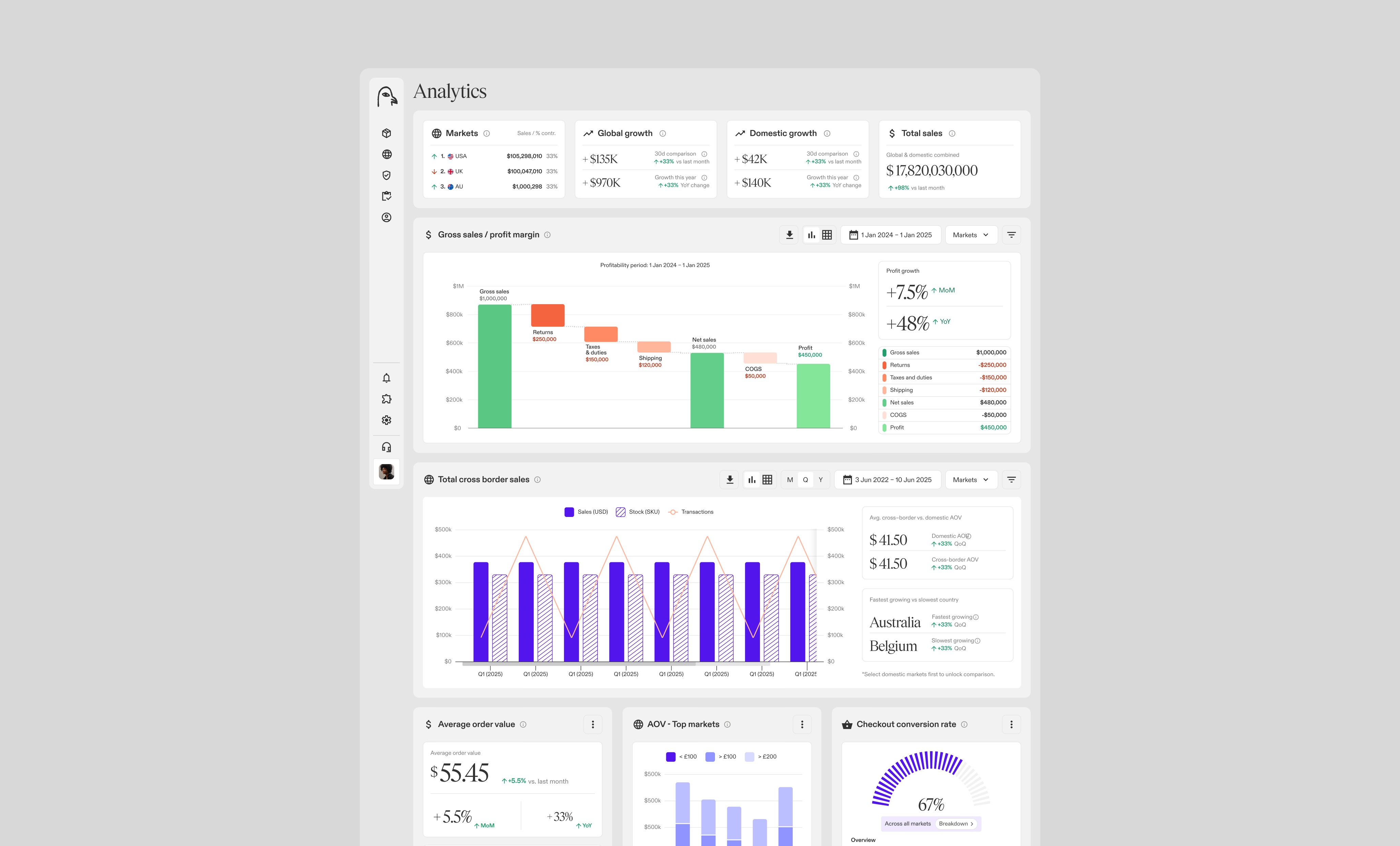
I designed Swap’s global analytics experience, turning a static BI tool into an AI-ready decision layer that helps merchants instantly see where they’re growing, where margin is leaking, and where to invest next. By defining hero metrics, inventing new data visualizations, and designing scalable drilldowns, I translated complex, multi-region data into fast, actionable insight. This work now underpins Swap’s AI roadmap and demonstrates how I turn complexity into clarity at scale.
Analytics Design System Strategy
Data Visualization Architecture
Interaction patterns for analytics
Cross-Functional Collaboration (Design ↔ Engineering)
Token-ready visualization theming
Documentation & Adoption Enablement
01 — Context / Introduction
With Swap expanding internationally, merchants began facing blind spots in how their business performed across regions and channels. Our existing Business Intelligence tool wasn’t built for this complexity, offering only static, one-dimensional views. We set out to create a new analytics layer that was dynamic, scalable, and AI-driven, something that could guide decisions, not just display data.
02 — Problem Statement
As Swap’s merchants expanded into more regions, their existing reporting tools couldn’t keep pace with the complexity of operating globally. What seemed like simple questions (Which markets are growing? Where are we losing margin? What’s driving performance?) became surprisingly hard to answer. The result was a pattern of critical visibility gaps.
Core problems to solve:
Fragmented visibility across core commerce metrics. Sales, units, AOV, returns, and conversion signals lived in disconnected places, making it hard to form a cohesive picture.
No unified view of domestic vs. cross-border performance. Market- and channel-level insights required manual exports and ad-hoc analysis, slowing decision-making.
Static reporting that couldn’t adapt to complexity. Merchants relied heavily on spreadsheets, increasing operational load and limiting flexibility.
Undetected performance bottlenecks. Margin leaks and conversion risks surfaced too late, making it difficult to react with confidence.
03 — Pathway
a.
Foundations
& Hero Metrics
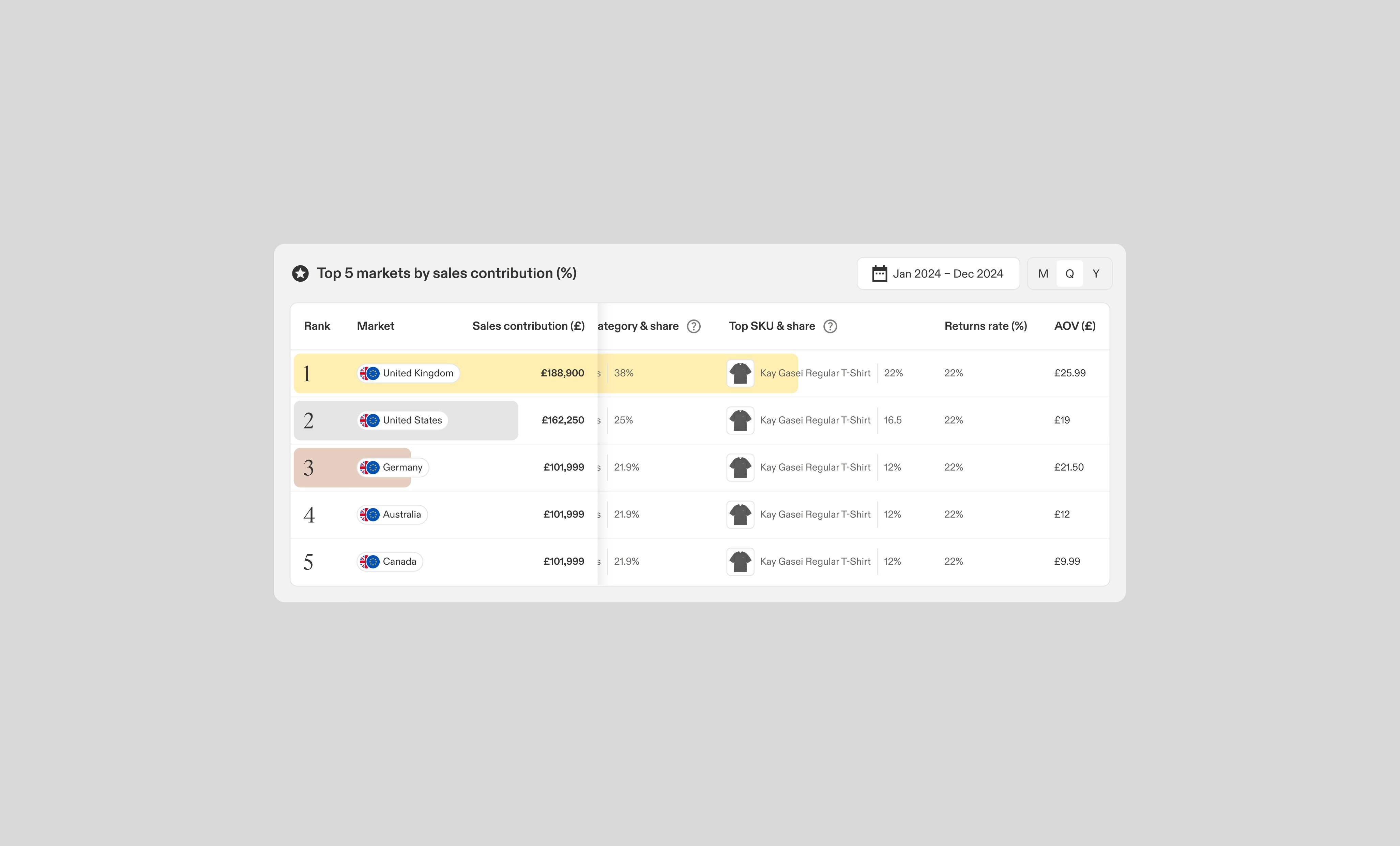
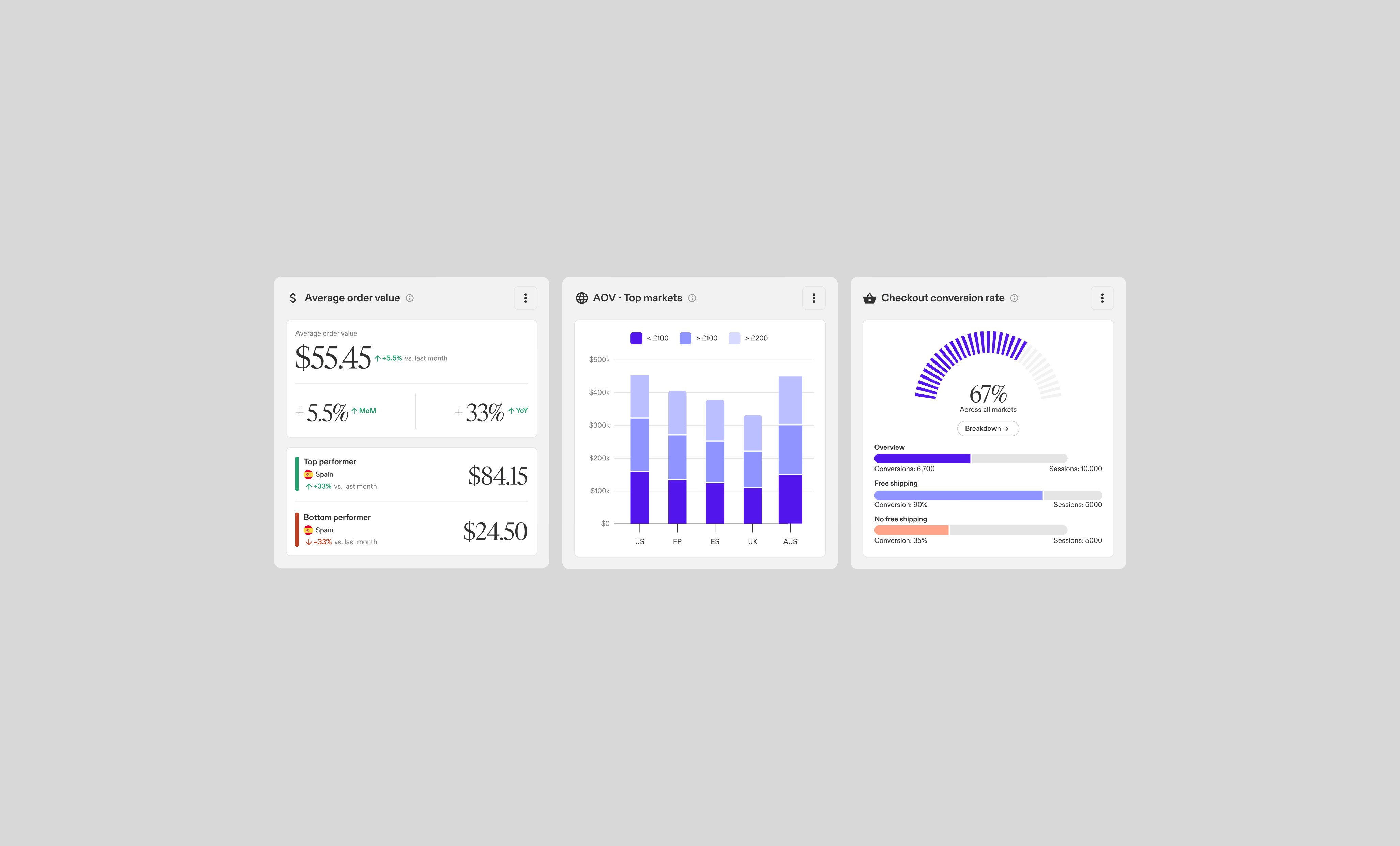
We defined the core “Hero Metrics” that anchor the product’s executive view: global sales, market growth, domestic vs. cross-border split, AOV, conversion rate, and transaction volume. These became the structural backbone for the new analytics experience.
b.
Cross-Border Intelligence & New Visualization Patterns
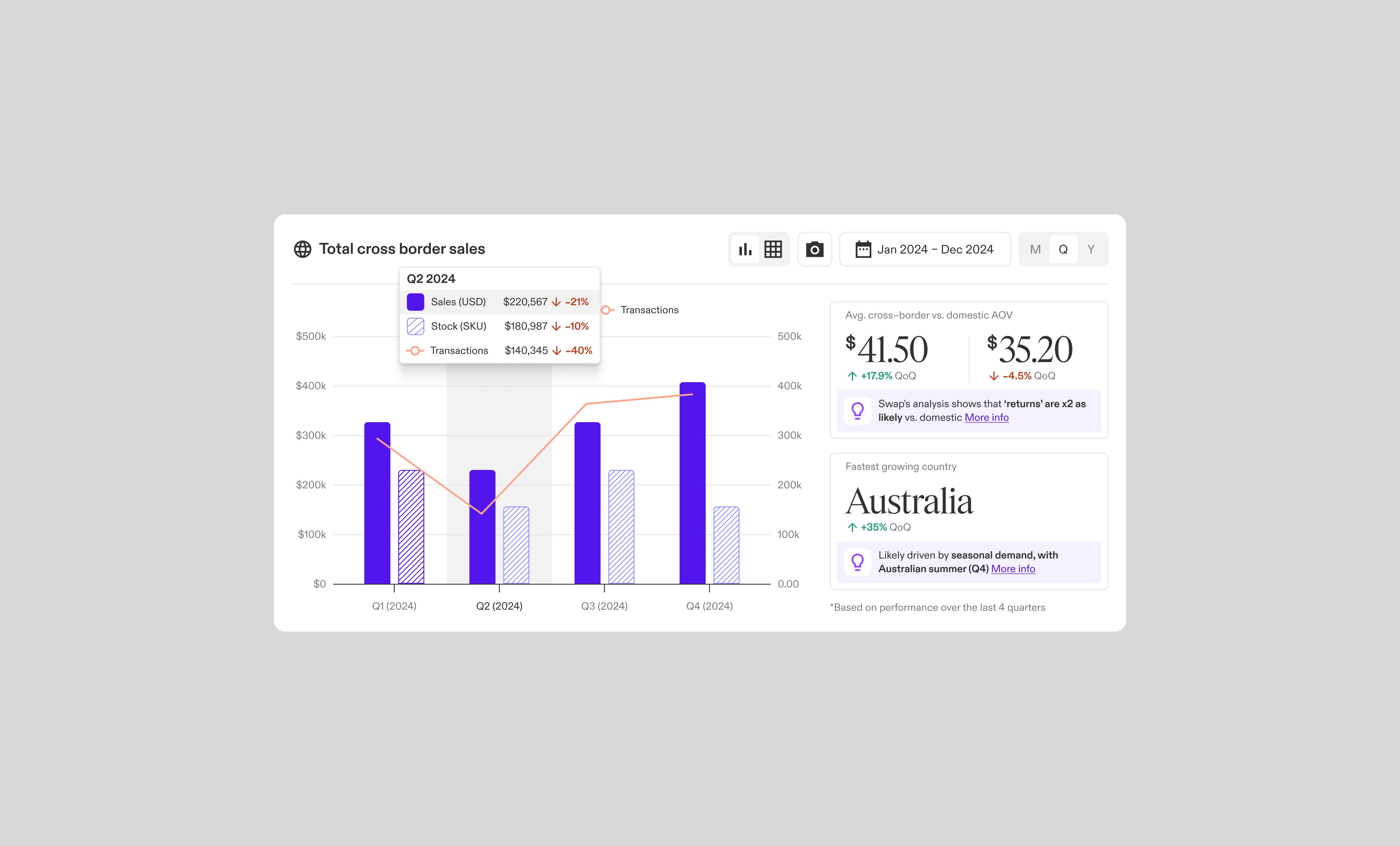
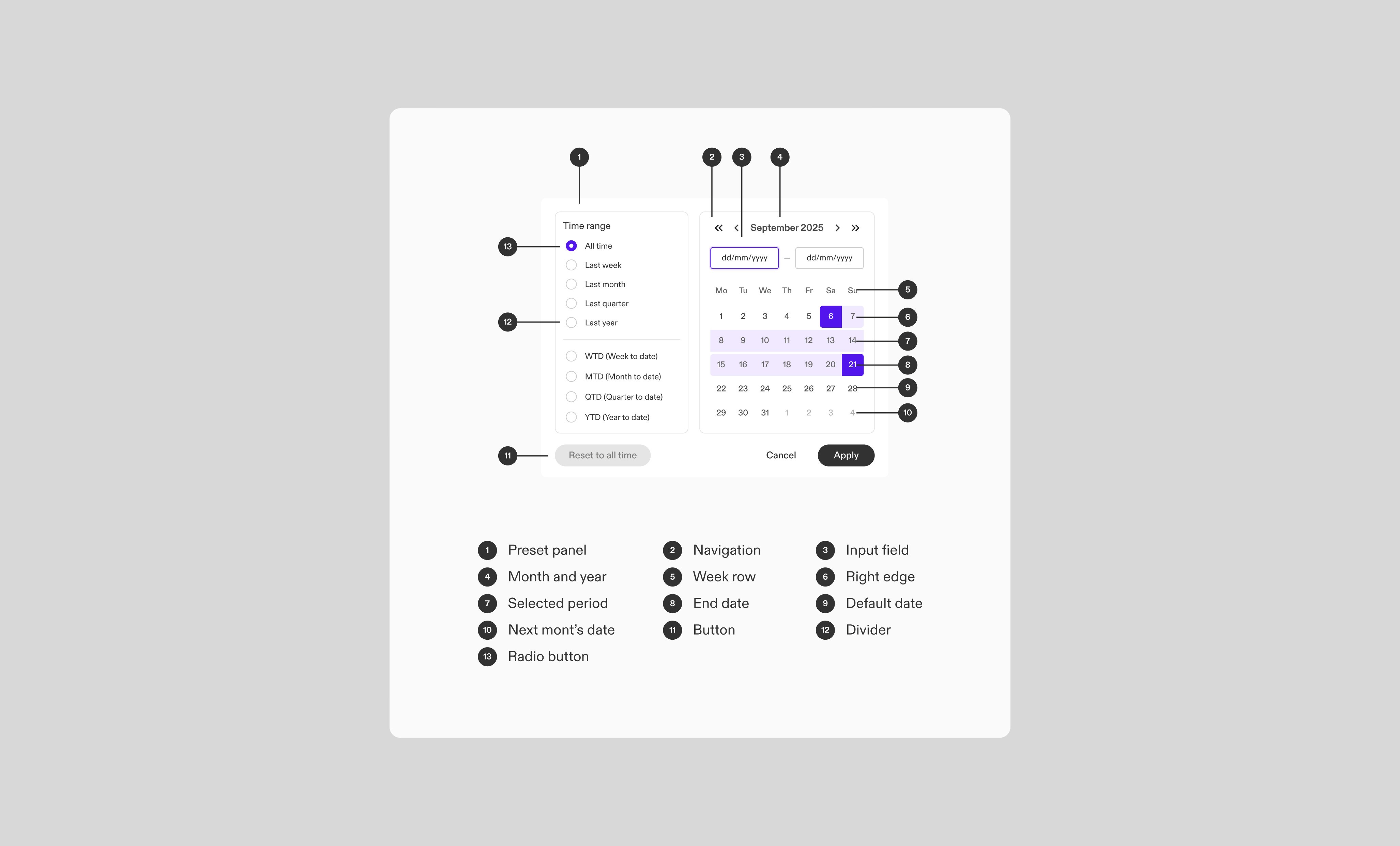
We introduced the AOV Triangle, a signature data viz correlating sales, units, and transactions in a way competitors don't. This led to a dedicated, robust data-visualization branch in the design system with scalable patterns for charts and filtering.
c.
Deep Drilldowns
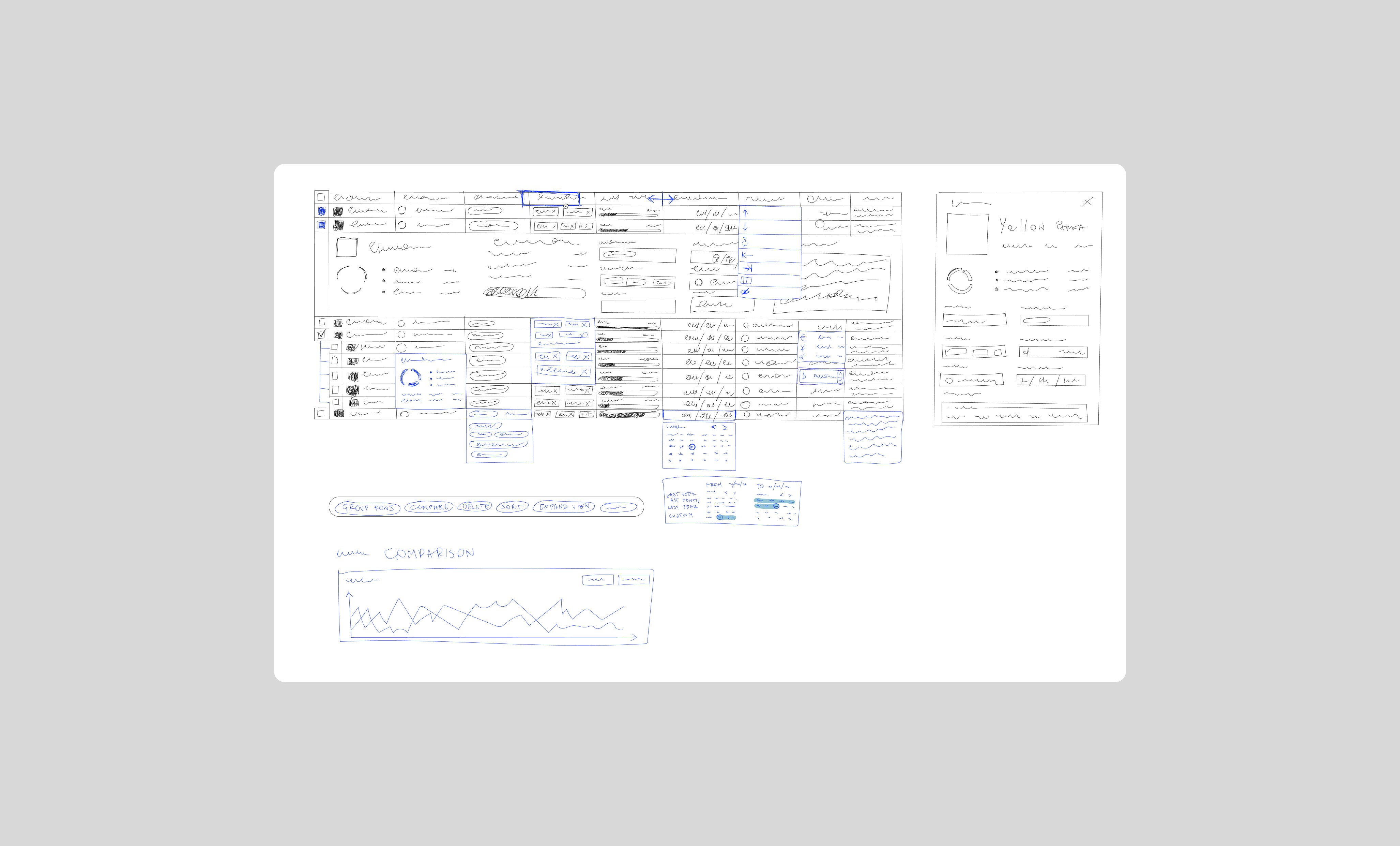
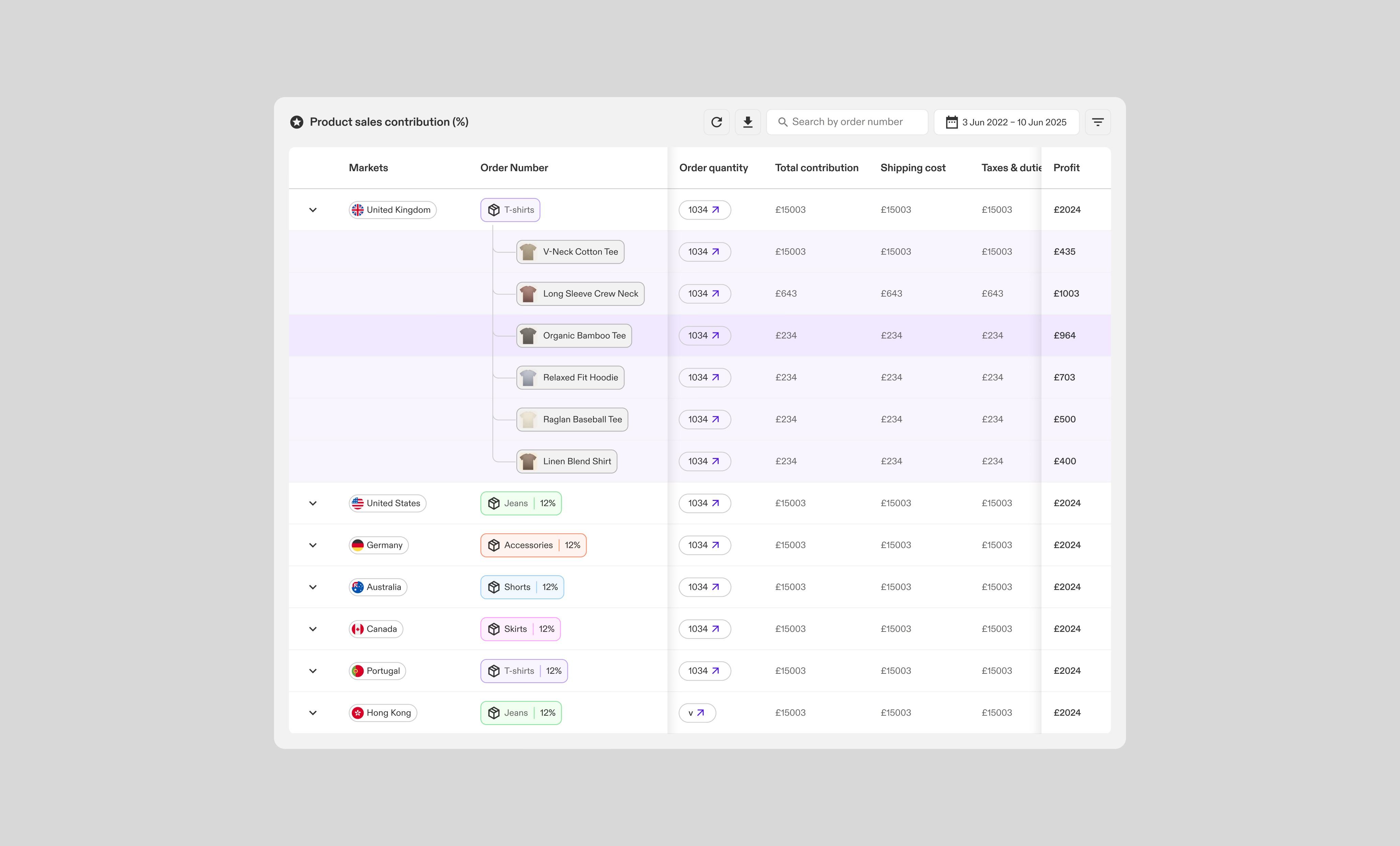
We built market-, product-, and checkout-level drilldowns that connected revenue, margin, and conversion signals. This created a bottom-up view merchants could explore without leaving the main analytics surface.
d.
Embedded Insights & Role-Based Views
To elevate the dashboard beyond raw data, we added embedded AI insights and role-specific configurations for Merchandising, Finance/Ops, and GTM teams. These surfaced anomalies, seasonality patterns, and emerging risks automatically.
e.
Scalability
& Future Intelligence
We architected the system to support future AI-driven capabilities including forecasting, profitability overlays, anomaly detection, and returns/shipping-cost intelligence, ensuring the foundations extend into Swap’s broader intelligence roadmap.
04 — Constraints & Goals
We weren’t building a dashboard in isolation. The Global Dashboard had to unify fragmented data sources, work across radically different merchant footprints, and operate on top of a BI model not originally designed for real-time, multi-dimensional intelligence. Every decision needed to balance immediate clarity with long-term scalability and future AI layers.
a.
Complex Data Foundations
The underlying BI infrastructure wasn’t built for live, correlated insights across regions, currencies, and customer behaviors. Data quality, currency conversions, and regional categorization required alignment across Data Science, Backend, and Product to ensure accuracy at a global scale.
b.
Wide Range of Merchant Needs
The system had to work just as well for merchants operating in 2–3 regions as for those managing highly complex networks across 20+ markets. The interface needed to feel lightweight for simple stores yet powerful enough for sophisticated international operations.
c.
Future Intelligence Built-In
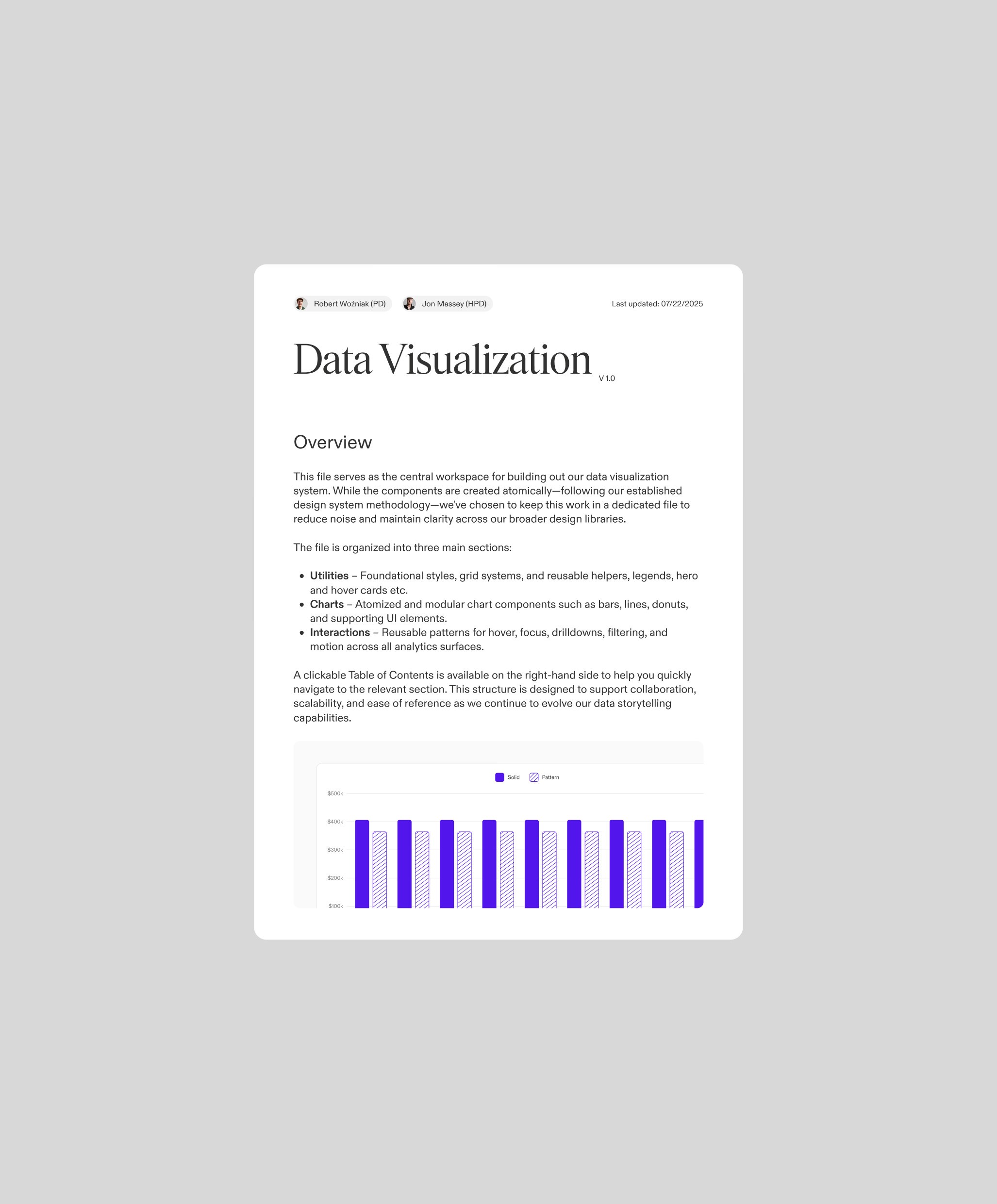
The dashboard couldn’t just solve today’s visibility problems—it needed to support forecasting models, anomaly detection, profitability overlays, and returns-to-shipping cost correlations. We also established a dedicated data-visualization branch within the design system to ensure complex graphs, comparisons, and interactions could scale over time.
What the Dashboard Needed to Achieve
The dashboard aimed to deliver AI-supported, executive-level scans of performance across all regions. It needed to surface clear comparisons between markets, channels, and segments while embedding automated insights that flagged opportunities and risks early. The system also had to reduce operational overhead through role-specific views and provide a scalable foundation for future analytics like forecasting and anomaly detection.
How We Measured Success
Success meant 75% of merchants in five or more regions engaging bi-weekly with two or more drilldowns per session. The experience needed to load in under two seconds and sustain at least two minutes of active session time.
05 — Challenges & Tradeoffs
a.
Balancing simplicity with dimensional depth
Merchants wanted complex multi-dimensional reporting, but we knew exposing everything at once would create cognitive overload. We solved this by establishing the Hero layer upfront, with progressively disclosed drilldowns beneath.
b.
Data availability & consistency
Cross-border performance requires stitching many data points: store currency, product categories, past periods, and order-level metadata. We partnered closely with Data Science to define a consistent data layer with aligned definitions (e.g., domestic vs. global logic).
c.
Performance vs. flexibility
A highly interactive dashboard can become slow if not architected correctly. To achieve <2 sec load times, we scoped filters to their widgets, cached pre-aggregated datasets, and limited full-page re-renders.
d.
Designing for both small & enterprise merchants
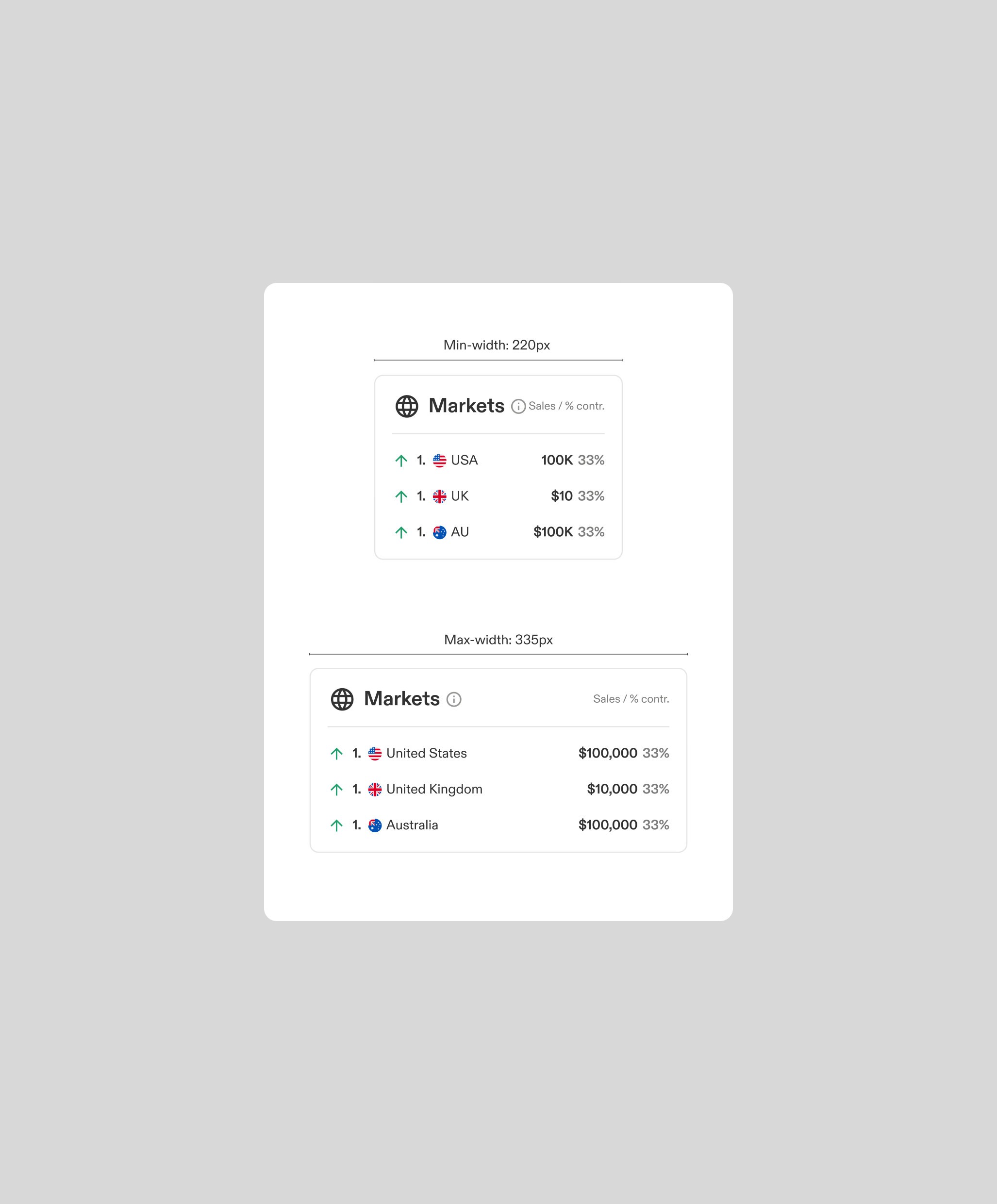
We structured the dashboard to auto-resize displays—showing what’s available even if a merchant has fewer markets, quarters, or products. This prevented empty states while maintaining visual balance.
e.
A new visual language for analytics
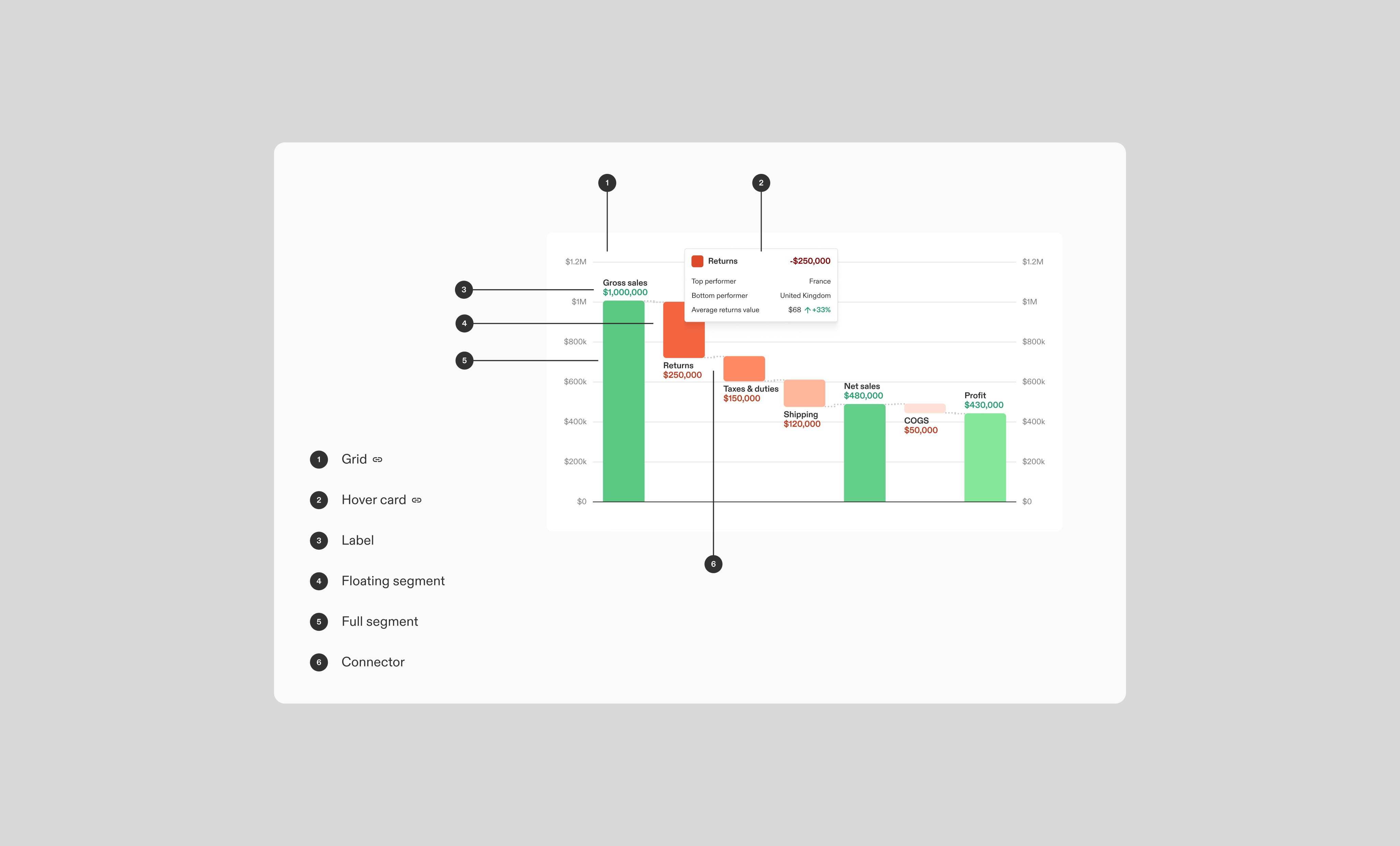
We established a pattern for Hero Metrics, tiles, and data visualizations that now extends across Swap’s broader product ecosystem. Creating scalable visual logic meant defining reusable patterns early.
06 — Outcomes & Impact
Although the initial analytics dashboard direction evolved, the work became a critical foundation for Swap’s next phase: an AI-driven insights agent that aligns with industry standards and offers far greater flexibility, personalization, and long-term scalability.
a.
A validated UX direction
Through deep product discovery, collaborative workshops, and iterative prototyping, we clarified what merchants truly needed from performance insights and where traditional dashboards fall short.
b.
Design-system-ready data visualization
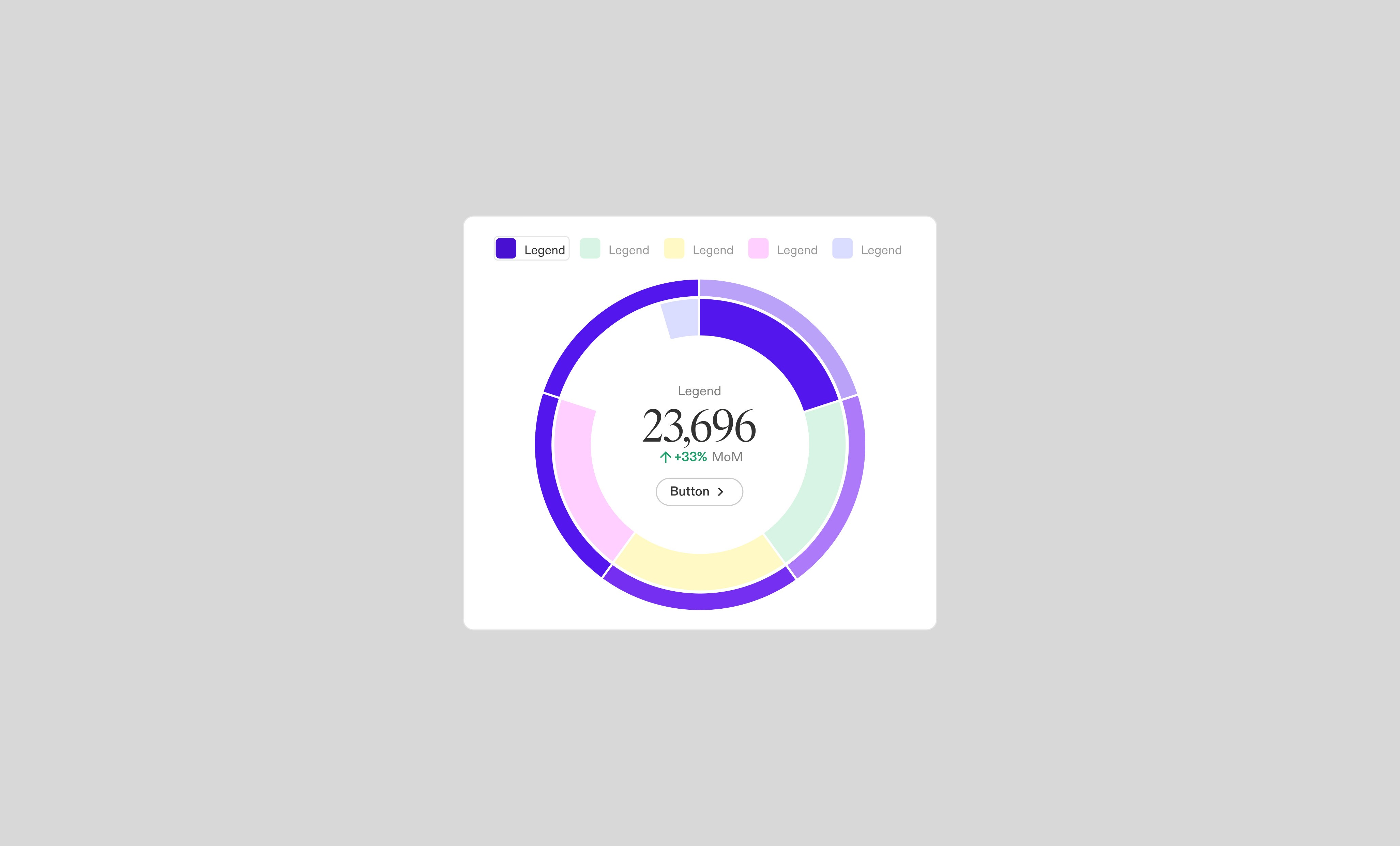
We introduced complex graphing patterns into the design system, establishing reusable visualization components that now support both the dashboard and the emerging AI agent.
c.
Cross-functional alignment
The work created shared understanding across Product, Data, and Engineering teams, enabling a seamless transition from dashboard concepts to a more ambitious AI insights model.
The project is now under active development as part of Swap’s AI roadmap, with our exploratory work directly shaping the product’s long-term intelligence layer.
07 — Reflection
This project was less about designing a dashboard and more about shaping the future of how Swap understands its own data. It forced me to think beyond screens, balancing executive clarity, merchant decision-making, data constraints, and long-term AI ambition at the same time. Working across leadership, Product, Data Science, Engineering, and Product Owners sharpened my ability to align diverse perspectives around a shared vision, especially under high stakes and tight performance constraints. Collaborating closely with another product designer on a complex, high-pressure initiative also taught me how to divide ownership, move fast without stepping on each other, and stay focused on outcomes over artifacts. While the initial dashboard evolved into a broader AI insights direction, the work proved its value by setting a durable UX, system, and collaboration foundation, one that continues to shape Swap’s product strategy today.